@barry
Forum Replies Created
-
AuthorPosts
-
 BarryKeymaster
I’m glad you’ve found some sounds you like and that you’ve got it working well enough for your purposes. I wasn’t able to reproduce the signal-cutting issue on my own build with either an Allan Woody Epiphone (passive) or Ibanez (active), so without being able to isolate where it’s occurring in yours, I don’t want to speculate about the cause. Thanks for documenting what you found and for giving the project a try.
BarryKeymasterResistance is Futile!
BarryKeymasterWith a Distortion+ it is very notable that you need to turn the Level and Distortion knobs up for unity or above levels.
BarryKeymasterI honestly cannot explain that.
The other option to increase distortion with the Red LEDs back in place (verify they are working first) is to increase R5.
You can try 470k.
BarryKeymasterI do not have an issue with either circuit with any of my instruments. Of course, different instruments, pickups, pickup height, etc. can all affect how hard a pedal is being driven, each in their own way. The intent was to have a powerful circuit that works in tandem with the amplifier gain, so not having a ton of distortion until the Gain is fully cranked was intentional. That said, I am going to test 8.2K and see how I like it. I may go with that instead to ward off any future issues.
I am glad you’ve now got the original problem sorted out. Increasing R6 to 8.2K stopped the signal from cutting out, but the trade-off is that you now have less available distortion through the rotation of the Gain control which makes sense.
If you want the pedal to break up earlier while keeping the 8.2K R6, you can simply change the clipping diodes. The LEDs are used purposefully in this circuit to create a Bass Drive that does not distort right away.
You can remove the LEDs and use 1N4148, 1N914, etc. instead. This will give you faster breakup and more available distortion. The trade-off is that you will lose some volume, but that shouldn’t be an issue (just turn the Level up). You could also experiment with a C1M Gain pot if you want to change the way the gain comes on through the rotation, but I would definitely try the diode change first.
So at this point, you’re simply tailoring the distortion and Gain response to your liking, and I would start your experiment with the clipping diodes.
I wrote this Clipping Guide which is very applicable to this exact situation. That should help you dial it in just the way you like it.
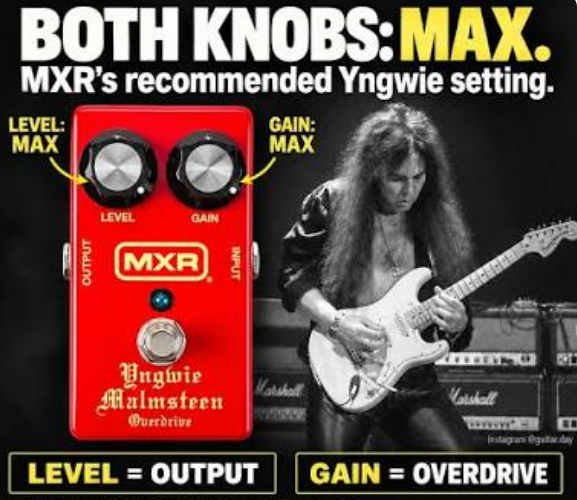
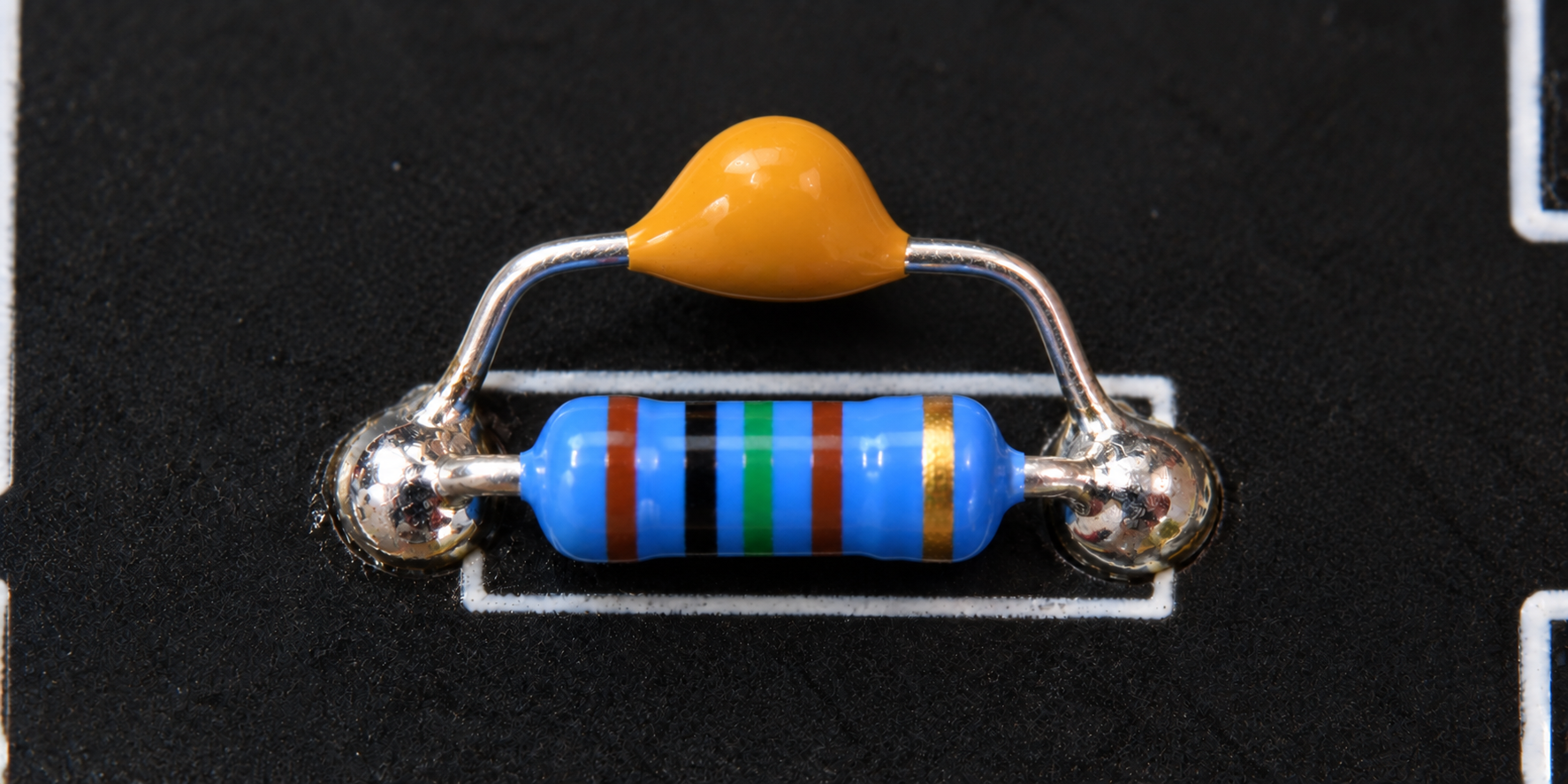
BarryKeymasterYou simply tack a leg of your 10p to 100p cap on either side of R7 using the solder that is there on each end of the resistor or add some extra if needed. That is parallel. I doubt you will notice a difference but it is good practice despite MXR not bothering with it.
BarryKeymasterThanks, I looked over your build and everything appears to be correct from what I can see, though be careful if the potentiometers do not have a protective backing on them which I cannot verify from the photo.
I do have one suggestion that may be worth trying, especially if you’re using higher-output pickups or prefer a pickup height closer to the strings.
It’s possible that the signal level going into the clipping section may simply be a little hotter than the circuit is expecting. R6 controls how hard that section is driven, so increasing its value may reduce the loading and clipping intensity.
If you have an 8.2K or 10K resistor in your parts bin, I’d try one of those in place of R6 and see if it changes the gain-drop behavior. This isn’t a confirmed diagnosis, but it would be a quick and simple test to see whether the input level/clipping section is what’s causing the problem.
If it doesn’t make any difference, we’ll know to look elsewhere.
BarryKeymasterOkay, that’s helpful. Since you’re using a passive bass and the signal comes back when you turn the Gain back down, let’s start with the obvious things before getting into troubleshooting.
First, please post a clear, well-lit photo of the top side of the PCB. Try to get the entire board in focus and close enough that I can clearly read the resistor color bands and see the component placement. I want to double-check the resistor values and make sure everything appears to be in the correct location.
I was just playing mine earlier today using an Active Ibanez.
Also, when you slowly turn the Gain up from minimum while playing, approximately where does the signal start cutting out in the rotation?
Are you using a C Taper 500K pot?
Does it happen at the same point every time?
BarryKeymasterWhile I wait for your response, and since I will be going out soon, I will address a couple of things.
The behavior of the two clipping LEDs is normal. D3 and D4 are wired in opposite polarity, so they respond to opposite halves of the signal waveform. They are not intended to light in unison.
The part I want to investigate is the signal cutting in and out when you increase the Gain control. You mentioned that everything else is working properly, so before we start looking for bad components or solder joints, I have an additional question:
When the signal cuts out, does it come back immediately when you turn the Gain back down, or does it stay out until you play another note?
If you can, let me know what the input source is, active or passive, and exactly what happens as you slowly turn the Gain control from minimum to maximum.
BarryKeymasterSo one step at a time.
Before I ask for photos and voltages, the first thing based on what you are saying that I want to know is are you using an Active Bass?
BarryKeymasterI do not have a control plate for everything yet. That is one of the many reasons I have been asking for donations because I run the business myself and it is extraordinarily expensive, especially during these times. I will add more as I have funds to do so.
I appreciate the enthusiasm. My suggestion in the meantime is to temporarily label it with (sharpie, etc.) and then you can easily cover it with a control plate when they are available.
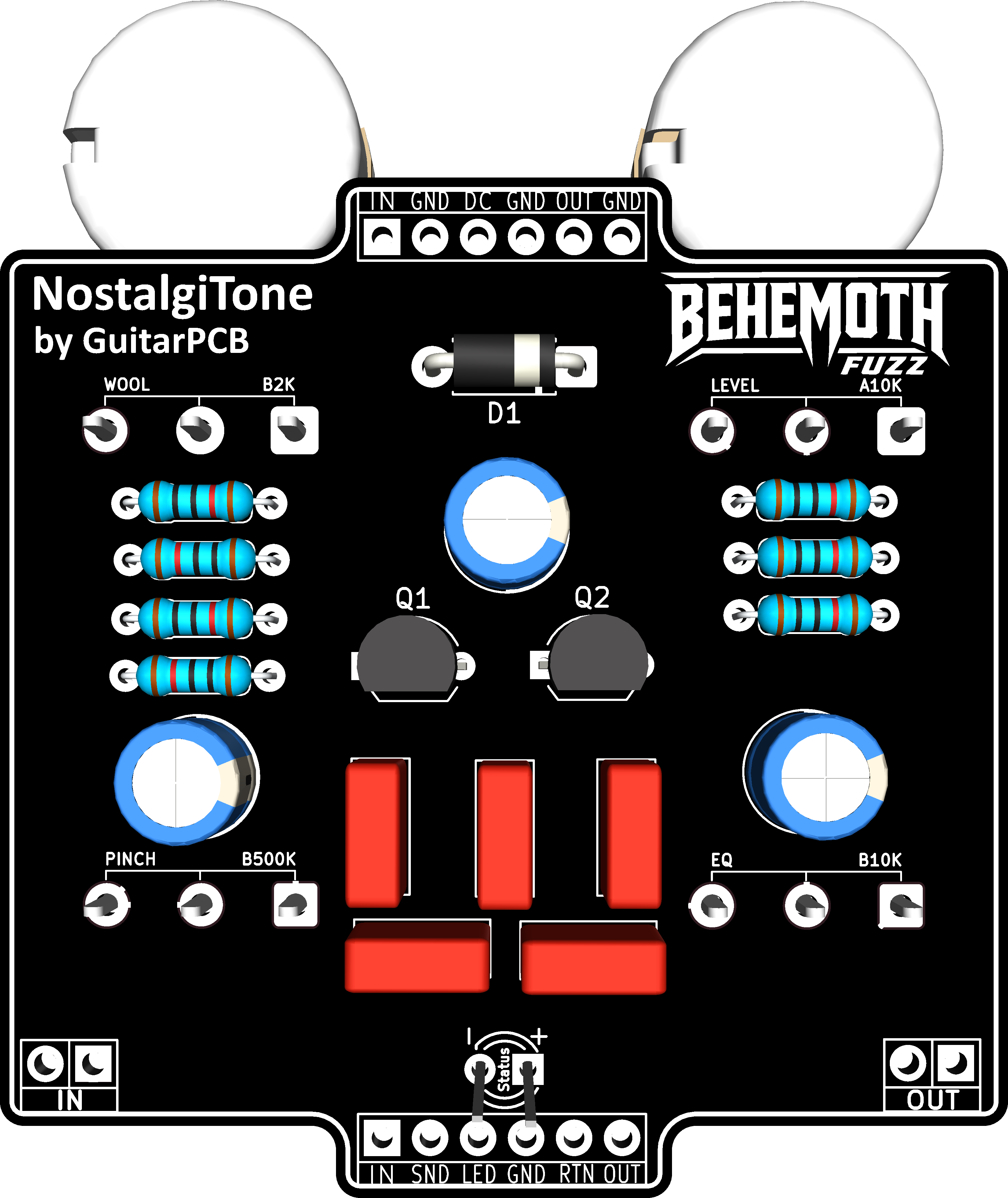
September 25, 2026 at 4:52 pm in reply to: Brand New NostalgiTone Releases + ROCK-Q Tone Module Updates #40642BarryKeymasterBehemoth Fuzz just released to help provide much needed support for many other projects.
Show some love here:
BarryKeymaster“So yeah, @Barry , i can 100% say that due to the Nostalgitone series, and the Bonus Boards last fall, I am officially 10 months without a cigarette as of tomorrow (25SEP-2026)”
That is a thing of freaking beauty! Congrats on that and after 10 months you have won!
September 23, 2026 at 3:57 pm in reply to: Brand New NostalgiTone Releases + ROCK-Q Tone Module Updates #40629BarryKeymasterI like the way you are thinking. The Edge and Brian May were masters of combining effects and using them in tandem. I’ve been a tone nerd for a very long time, so I absolutely love geeking out over possibilities like these. That’s one of the reasons I’ve always been such a big promoter of Dual and Triple Combos, using effects in tandem, and especially order switching. Once you start thinking beyond using one pedal at a time, your pedalboard becomes an Artist’s Canvas.
And there are some very exciting Singles coming as well, including Compression Engine and Behemoth. I would love to be able to release everything at once, but the reality is that doing that gets expensive very quickly, not just in terms of the PCBs, but everything that goes along with developing, documenting, testing, and producing each project. So I really appreciate the support as I release these projects as they are ready.
There isn’t anything particularly “common” about the way we’re approaching tone, either. This is about more than simply building a pedal and plugging it in. It’s about experimenting, combining different circuits, changing the order, and using them together to create something that is uniquely your own. That’s the part I really enjoy, and seeing people start thinking about these possibilities is exactly what makes it so much fun.
September 23, 2026 at 2:37 pm in reply to: Brand New NostalgiTone Releases + ROCK-Q Tone Module Updates #40627BarryKeymasterYes, The Burner was purposefully designed to work with STADIUM ROCK, but that’s certainly not its limit. How you use the controls will determine what you get out of it. Let’s just say that turning everything full up simply because you can is almost never the answer.
As for using a circuit as a boost to accentuate the midrange, you could use AmpEQ and slightly lower the Bass and Treble. That effectively gives you a mid boost, but one that you can dial in exactly the way you want it rather than being locked into the particular midrange character of something like a Tube Screamer.
@everyone
So has anyone been thinking about other potential combinations? There are a lot of other new releases that might deserve some attention, like CitrusAmp, PowerStage, and Diamond 30, just to name a few. There are some pretty interesting possibilities when you start thinking about how these projects could work together.
One that I jumped on right away for a Dual Combo with a specific purpose was Sonic Architect. Its ability to be placed in an amp’s effects loop means you can enhance the overall clarity and resonance without affecting the amplifier’s preamp. It also gives you the ability to quickly change the amp’s EQ to suit the room or environment without touching the amplifier’s controls. That’s important to me because changing the amp’s tone controls can throw off the gain tones I’ve already dialed in, leaving me having to fight to find them again. Sonic Architect gives me a way to make those environmental EQ adjustments while leaving the amp’s core settings alone. Such a valuable asset.
September 22, 2026 at 5:22 pm in reply to: Brand New NostalgiTone Releases + ROCK-Q Tone Module Updates #40619BarryKeymaster100% – Ziggy takes me right back to my teen years of guitar. 😁
My thoughts there are toward some kind of Dual Combo using the Modbender with either a Cock-It-Wah or a ROCK-Q Artist Profile, although I’m now leaning toward the Artist Profile for the instant accuracy and the ability to offer slightly more diverse tonal variation.
The only problem with creating a Dual Combo is that ROCK-Q won’t fit into a 1590BB2. It would require a slightly larger 1590XX. Alternatively, you could just go with building the “Singles.”
Regardless, I’m pretty certain I’ll develop an Artist Profile for Mick Ronson after I finish doing a deep frequency analysis of his isolated guitar tone.
September 22, 2026 at 2:53 pm in reply to: Brand New NostalgiTone Releases + ROCK-Q Tone Module Updates #40615BarryKeymasterYes, the ROCK-Q will definitely feature a Kirk Hammet Q.
Regarding The Burner: Aside from its obvious potential for adding to the Boston tone, has anyone considered what it might do for the Queen tone when paired with the Diamond 30 and, eventually, the ROCK-Q May Edition Artist profile?
And what about some other likely candidates?
There will be some interesting combinations here. What do you think?
-
AuthorPosts