
Your Source for DIY Pedal PCBs and NostalgiTone! › GuitarPCB Forum › Show Off Your Build › Jet Gemini (NT Bass Overthruster + NT Chorus)
Tagged: Bass, Chorus, Combo, Nostalgitone, Overthruster
- This topic has 5 replies, 2 voices, and was last updated 4 days, 6 hours ago by
 Barry.

-
AuthorPosts
-
November 16, 2026 at 12:47 pm #40995Byrdhouse CompressorParticipant
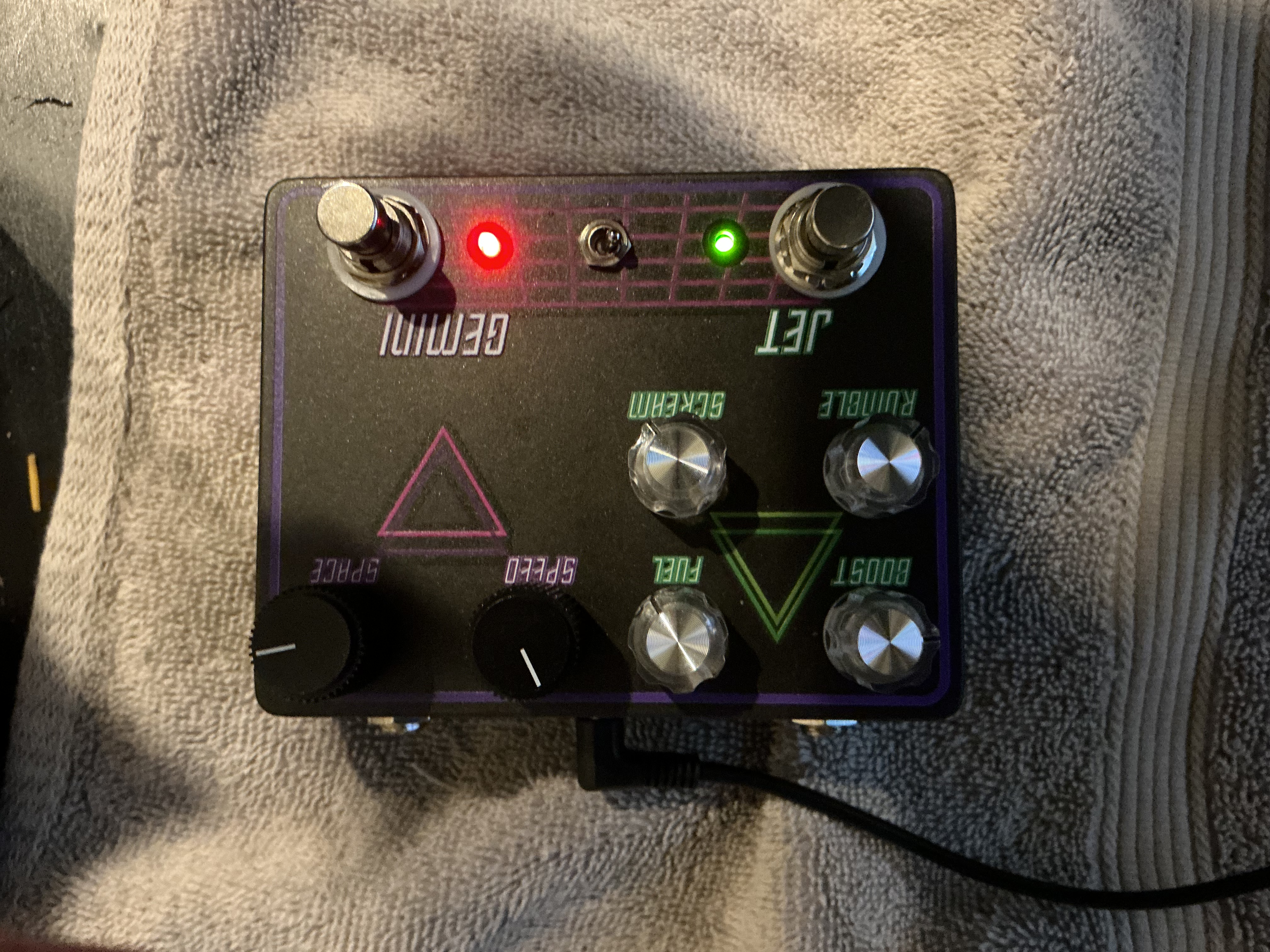
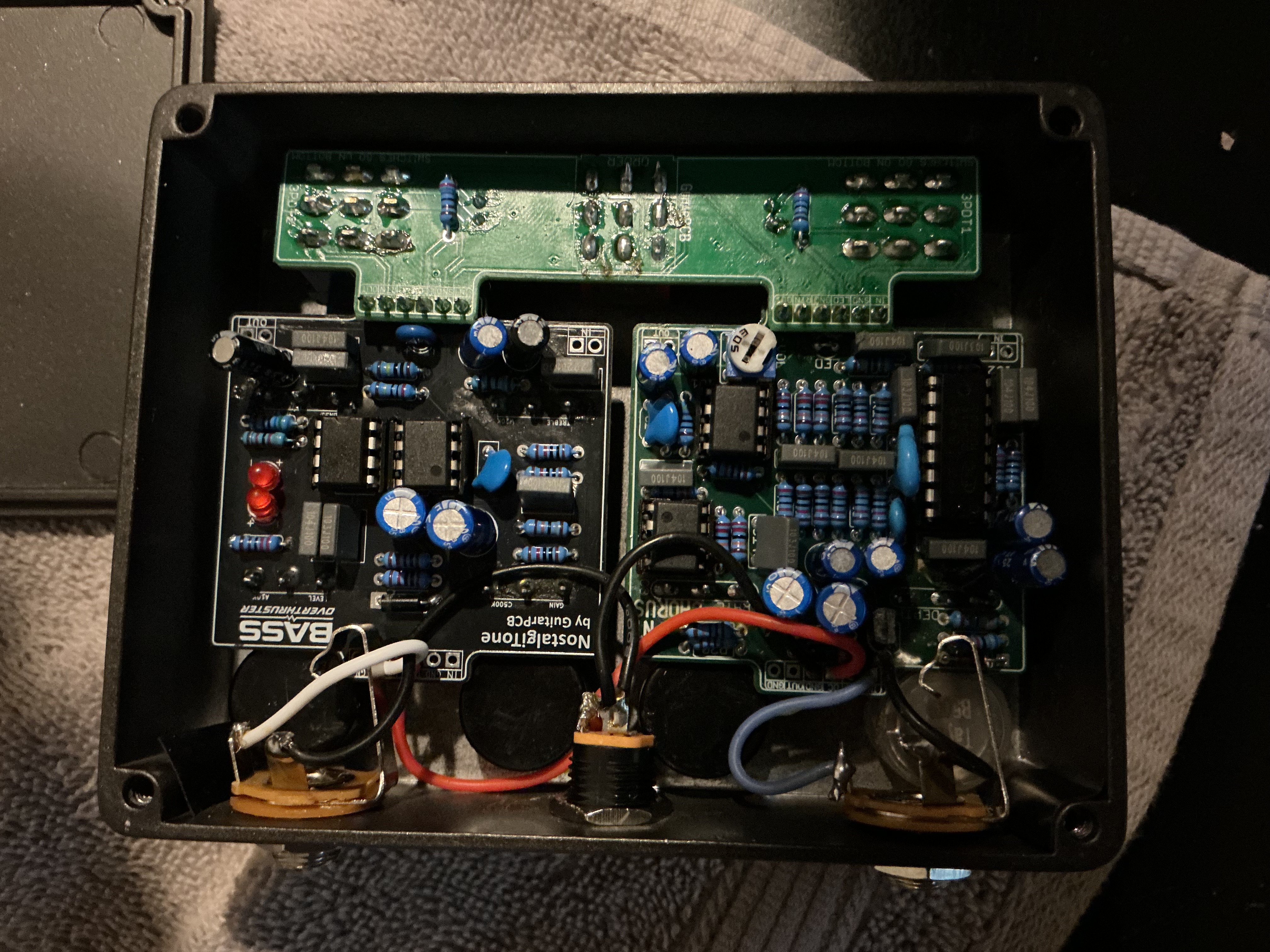
Hello! Over 2 months ago I asked for some help in creating a bass combo pedal for my cousin this Christmas. I got lots of help and recommendations from people on the forums, and although I haven’t posted recently, I’m always lurking the boards to see what people are doing lol. In my first SOYB post, I present the Jet Gemini (inspired by Jet Jaguar). The Jet side is the NT Bass Overthruster, and the Gemini side contains the NT Chorus (I believe the PT399 version, not the Analog Chorus version). My Precision Bass Special is a little weak on the output, which is a regular issue for me (side note – anybody else have that issue with quiet pickups on the Precision? Any tips?) but got some grit. I plugged in my Strat and I could REALLY hear the dirt that I was looking for with the bass. My brother is the real bassist, so he’s bringing his over to test out the pedal. Set the trim on Chorus to unity, but I’m betting it could get nasty if I increased the gain on that before engaging the Overthruster. Sorry if the photos are off, I’m using an ipad until i replace my phone, hence no flash. Also, I see the messy flux – is it worth it to completely isopropyl the board and scrub, or should i just remove the majority of it with an alcohol pad?
November 16, 2026 at 2:07 pm #40997BarryKeymasterYou could increase the Gain on the OverThruster but what works for you may not likely work for your brothers Bass.
Based on everything you said I am almost 100% convinced the first thing to do with regard to your weak pickup problem is to check the pickup height.
For a Fender Precision Bass, set the pickup height last, after the bass is tuned to pitch, the neck relief is set, and the action is set. Changing any of those changes the pickup gap, so do them first.
You need a tuner, a 6 inch ruler marked in 64ths or mm, and a Phillips screwdriver for the pickup height screws.
1. Tune to pitch, with the strings you will play. Pickup height is measured at playing tension.
2. Press the E string down at the last fret. Measure from the bottom of the E string to the top of the pole piece on the E/A half of the split pickup.
3. Do the same with the G string at the last fret, to the top of the pole piece on the D/G half.
4. Start at Fender spec: Vintage or Noiseless, 8/64 in (3.2 mm) bass side, 6/64 in (2.4 mm) treble side. Standard P, 7/64 in (2.8 mm) bass side, 5/64 in (2.0 mm) treble side.
5. The P pickup is two halves, E/A and D/G, each with its own screws. Set each half on its own. The bass side gap is larger because the thicker strings vibrate wider.
6. Turn the screws in 1/4 turn steps. Clockwise lowers the pickup, counter-clockwise raises it. Retune and remeasure after each change, small moves matter.
7. Plug into an amp, clean, EQ flat, and play each string with the same strength. The goal is even volume across all four strings, not just hitting the numbers.If it is too low you get thin, weak tone.
If it is set too high can pull a string sharp.One more thing worth adding, because it comes up a lot with bass. Pickup height and pickup type are almost always the culprit with bass, more than with guitar.
Bass strings are thicker, they move wider, and the pickups put out a much stronger signal, especially on that first hit. So a small change in pickup height changes the output a lot, and different pickups hit a pedal or amp very differently.
A short scale Mustang with loose strings gives a big, loose transient that can slam an overdrive too hard and sound too strong. A Rickenbacker with tighter strings and a different pickup gives a steadier signal, so the same pedal can sound just right, and become a favorite. Same pedal, same settings, very different basses.
That is why I always start with verifying your pickup height on a bass, before changing the pedal.
Finally, if you want the best advice about a GuitarPCB circuit be sure to ask at GuitarPCB.
November 16, 2026 at 7:42 pm #40999Byrdhouse CompressorParticipantThanks for the help, Barry! I’ve no doubt it’s just my bass that needs some proper maintenance, it sounds great, and it feels very versatile – it can really be a clean boost that improves the tone of your bass, or a distortion pedal. It feels incredibly responsive to my fingers.
November 16, 2026 at 8:57 pm #41000BarryKeymasterIt only takes 1o minutes to set the pickup height.
It is probably the best Free upgrade you can DIY for all your electronics. Measure them and see how far off you are. Hold the low string down at the highest Fret and measure the distance between the pickup pole to the bottom of the string. Set it to spec. Repeat for the high side. Bam, your done.
November 17, 2026 at 4:03 am #41001Byrdhouse CompressorParticipantYou weren’t kidding, I adjusted the height and it definitely helped with the output. Thanks again.
November 17, 2026 at 11:04 am #41002BarryKeymaster“You weren’t kidding, I adjusted the height and it definitely helped with the output. Thanks again.”
I am glad that was helpful. The entire circuit that makes up the final tone starts with the guitar so I am always thinking about that. I also think you can now safely test your new Dual Combo with results that will be closer to what your brother might experience.
The flux is only cosmetic once dry, clean it with an old toothbrush and 90% plus isopropyl if you want it tidy for photos.
-
AuthorPosts


- You must be logged in to reply to this topic.