
Your Source for DIY Pedal PCBs and NostalgiTone! › GuitarPCB Forum › GuitarPCB Build Support › Big Muff Pi, 33k resistor question + some more ( Beginner questions )
- This topic has 8 replies, 3 voices, and was last updated 6 years, 6 months ago by
 Anonymous.

-
AuthorPosts
-
March 9, 2020 at 7:59 am #11482AnonymousInactive
I have just begun soldering pedals after just repairing my old ones when they have broke etc.
Now i have got a Big Muff Pi kit building a Green Russian, got to R25 where they suggest you should try between different 33k because some say it makes a different and other does not.
I see they sent me two 33K resistors, but what makes them different?Also the resistors on top without naming on paper, what are they? Ive gone through trying to find it myself – realised you can see what value things has through looking at colours etc and read alot about the old green muffs but i have not found answer iam looking for. Always harder when you dont know where to look.
Thanks for Reading, i hope i dont waste your time with question – i understand its a very beginner question but i cant sort it out. Also harder since i cant access page for bill of materials.
March 9, 2020 at 8:48 am #11483CybercowParticipantThe Doomrat – building pedals van be fun and may often come across as simple as putting together a Lego kit or a “paint-by-numbers” painting. However, guitar pedals are fundamentally electronics in the nature and require some familiarity with the aspects of electronics. One of the most important aspects of electronics is knowing how to identify parts (components).
All of those 33K resistors are the same. They are simply not all bonded together on the same paper banding.
The unmarked “resistors” are not resistors at all. Those are diodes. The 4 orange diodes with the black band at one end are small signal diodes. The band identifies the cathode. (Diodes are polarized components and how they are oriented (placed) onto the PCB is vital to their proper operation.) The larger black diode is likely used for power protection.
In the interest of adding to the quality of your pedal building journey, I suggest you do a bit of research on “electronics” and sort out how to identify the different parts and discern their values and orientation where applicable. Working with and understanding electronics is a journey and the information is absorbed at different rates by different people depending on how much one is willing to commit to the learning process.
In this forum there is a section dedicated to “building guides” and therein you will find several posts worth reading to assist you. It’s up to you to do the reading and I recommend there. Here’s the first link: GUIDES PAGE Mandatory Reading for All
Hopefully, this info gets back on your building excursion.
March 9, 2020 at 9:45 am #11485AnonymousInactiveYes i know its not lego, and yes iam not that familiar with Electronics but iam a more learn by doing guy.
“But the 33K resistor that is for itself has different colour marking? Seems like its a slightly different version of a 33k even if it has the same value, or is it just a fabrication thing where they make some slightly bigger and with wider colour bands?” # Sorry read your post to fast and missed what you said about paper binding sorry for that – and thanks for help.And yes i have read through alot of those pages already, i missed Component beginner guide tho which i found really useful, thanks.
March 9, 2020 at 9:55 am #11486AnonymousInactiveAnd yeah i wish i was that guy that read up on everything, then did it – but thats not the way i learn.
I have learnt to wire motorcycle Electronics and renovate motorcycle Engines, building guitars etc by doing it – and googling and asking for help when encountering problems.
Its hard to take in new information in loads when its such a big subject like Electronics. ( For me atleast ).
Easier to take it step by step, and google or ask when something seems confusing.March 9, 2020 at 1:03 pm #11502CybercowParticipantThe DoomRat – learning is process and requires discipline to overcome what we “don’t like” about the process. Electronics construction is one thing, but what about when things go wrong? How does one troubleshoot an electronics issue without a foundation of electronics knowledge and the proper tools with which to do so? Just sayin’.
March 9, 2020 at 1:06 pm #11503BarryKeymasterRegarding the resistor: If you flip it the other way it is the same color banding which is all that matters since different factories on different days will have slightly different widths in banding.
Learn more about it using this Online Resistor Calculator
If you want to learn in an as you go fashion then simply expect much more to go wrong which I agree will teach you well but also may cost you more money or even the desire to finish. Many years went into preparing our Guides and they are extremely consolidated into the most important things all beginners need to know. As they say in Pennsylvania “either way it’s your Perogi.”
Finally the Build Guide which contains the BOM you say you need is also on the Guides Page.

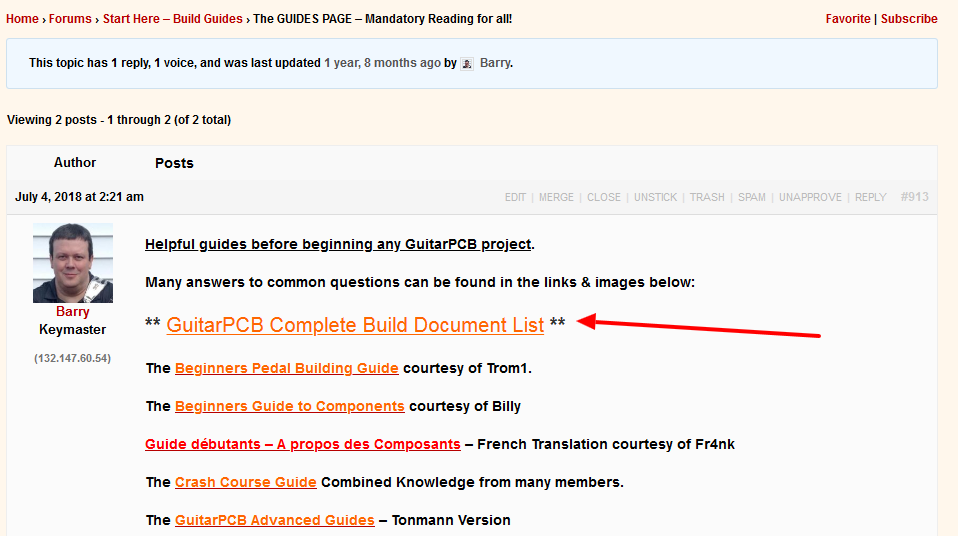
There is an Alphabetical list of all of our Build Documents at the very top of our Guides Page.
I hope that helps.
March 9, 2020 at 2:27 pm #11512AnonymousInactiveYes i agree with both of you, but my mind doesnt handle text the same way as seeing stuff – i can read that the resistors is there because of x y but it becomes so much more apperant when i see it on the board.
And yes its more costly, which i have realised on many more hobbies, but i try to keep it as simple as possible and building up on that. And my troubleshooting is going to a friend that is a expert with Electronics and he points out what i did wrong and should do instead.
But thanks for all the links to the guides, ive read some of them – and will continue to read as i progress with the build.
– Erik
March 9, 2020 at 2:36 pm #11513CybercowParticipantThe DoomRat – cool beans. We can only do what we can do. All the best with your builds! Cheers.
April 3, 2020 at 2:52 am #12162AnonymousInactiveI want to thank you Barry and Cybercow for putting links up my face, the russian muff is finished, but can probably get built better since i found wiring confusing, also burnt a few pads that had to be re-grounded.
Not that much sustain for a guitar but sounds good on bass, but will be fun to try one more and make it right from beginning and probably do a more high sustain version.
And again, thanks for links etc ive re read them several times and basically have beginner component guide up always, anyway here is the russian muff.
<p style=”text-align: left; padding-left: 40px;”></p>
<p style=”text-align: left;”></p> -
AuthorPosts





 </p>
 </p>
- You must be logged in to reply to this topic.